01469 577000 | info@trailertrans.co.uk | Eastfield Road, South Killingholme, Immingham, North Lincolnshire, DN40 3DQ


Preparing for CBAM: What Importers Should Know
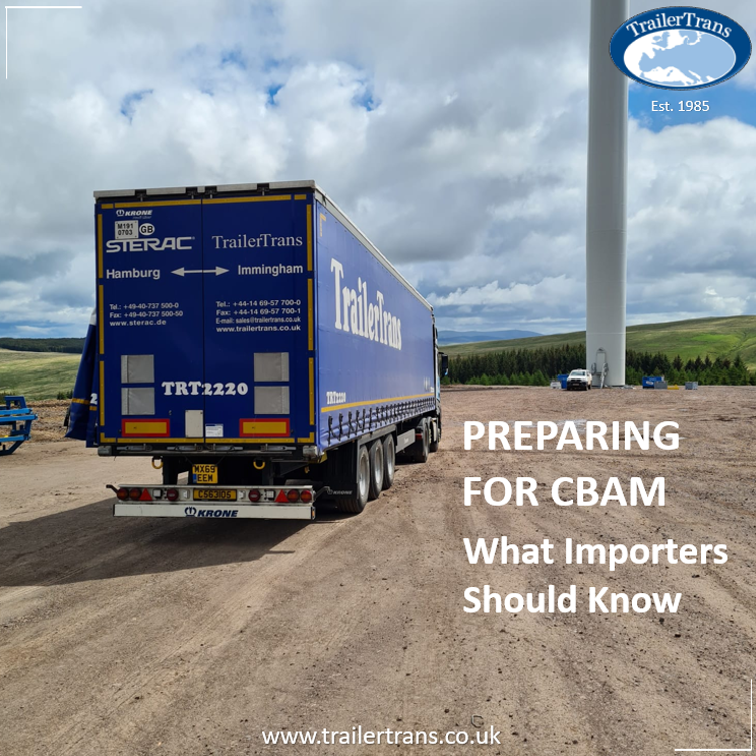
Preparing for CBAM: What Importers Should Know
Businesses involved in international trade may have heard increasing discussion around CBAM in recent months.
CBAM, short for Carbon Border Adjustment Mechanism, is designed to help ensure certain imported goods face a comparable carbon cost to similar goods produced domestically.
With CBAM due to come into force on 1 January 2027, businesses involved in international trade now have less than three months to understand how the changes may affect them.
While CBAM will not affect every shipment or every industry, businesses importing certain products should begin familiarising themselves with the upcoming requirements.
What is CBAM?
CBAM stands for Carbon Border Adjustment Mechanism.
The aim is to reduce the risk of carbon leakage by helping create a more level playing field between domestic producers and imported goods.
The UK Government plans to introduce CBAM on 1 January 2027.
The new requirements will apply to imported goods within the aluminium, cement, fertiliser, hydrogen, and iron and steel sectors. Further information about CBAM can be found on the GOV.UK website.
Why does CBAM matter?
For businesses importing affected goods, CBAM may introduce additional record-keeping, reporting and compliance requirements.
Understanding supply chains and maintaining accurate documentation is likely to become increasingly important.
While transport providers do not determine whether goods fall within the scope of CBAM, accurate information and supply chain visibility can play an important role in supporting international trade.
Preparing ahead of time
Although implementation is still a few months away, now is a good opportunity for businesses to become familiar with the changes.
Businesses importing affected goods should review their supply chains.
They should also seek professional guidance where appropriate.
Taking action now can make preparation easier.
It can also help businesses avoid surprises closer to implementation.
More guidance to follow
This article is intended as an introduction to CBAM and the upcoming changes.
Over the coming weeks, we will be looking in more detail at some of the practical considerations that importers may wish to review before the new requirements take effect.
International trade continues to evolve
International trade requirements continue to develop as regulations change and new policies are introduced.
Staying informed helps businesses adapt to new requirements.
It also helps support efficient supply chains and freight movements.
You can also read more about our UK to Northern Germany transport services.
Whether your goods are moving across Europe or further afield, understanding developments such as CBAM can support better planning.
It can also help businesses make informed decisions.
Contact Us
- Eastfield Road, South Killingholme,
Immingham,
North Lincolnshire,
DN40 3DQ - © 2026 TrailerTrans (Europe) LTD
Eastfield Road, South Killingholme, Immingham, North Lincolnshire, DN40 3DQ
Company No. 01886995 - 01469 577000
- sales@trailertrans.co.uk


© Copyright 2026 | Supported by Vixsoft.com